Invisalign vs Braces: Which Teeth Straightening Option Is Right for You?
Clear aligners or metal brackets? Here's how to decide what's best for your smile.

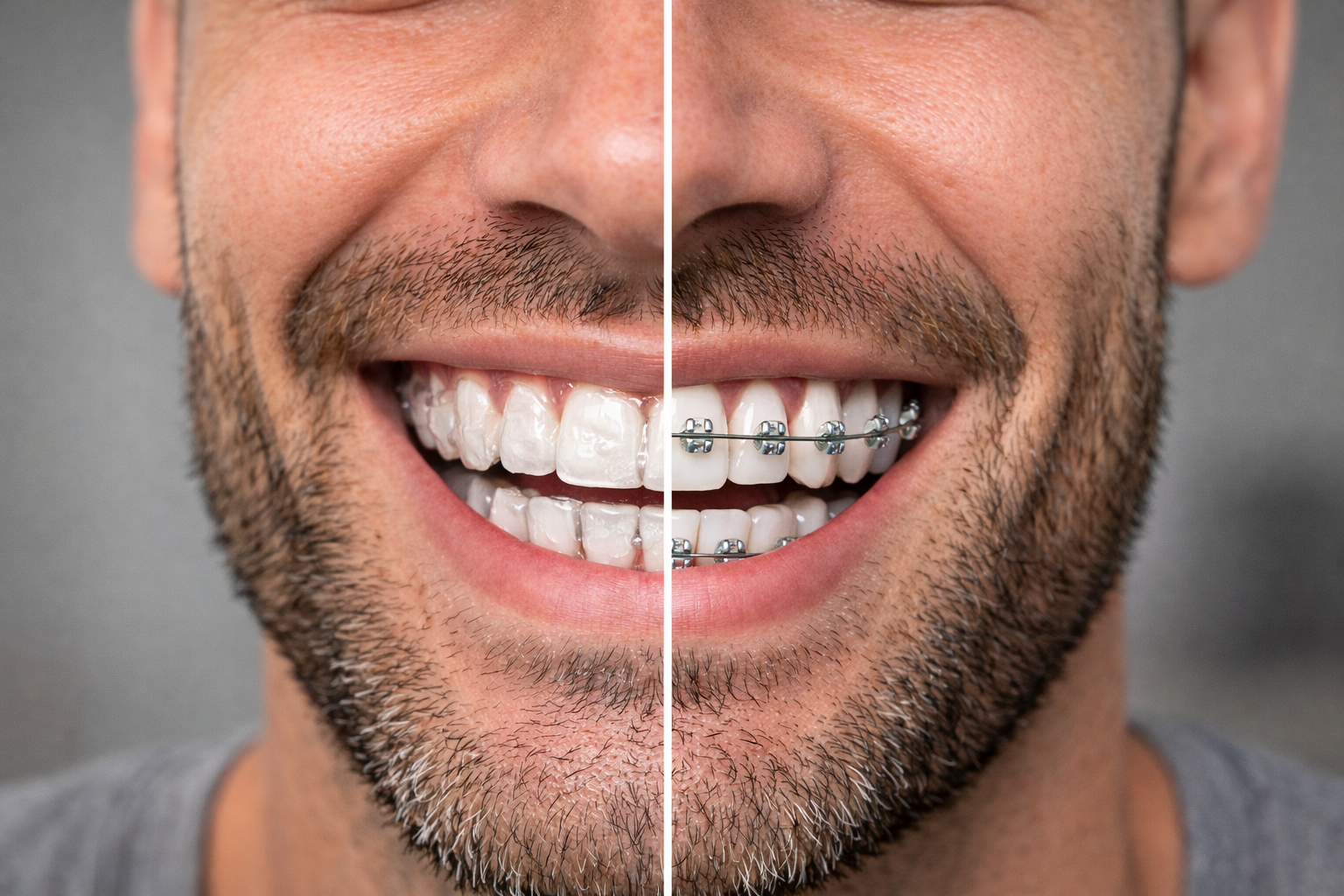
Photo: HelpDental
Dreaming of straighter teeth? You're not alone. Adult orthodontic treatment has surged in recent years, with clear aligners making teeth straightening more accessible than ever.
But with so many options available, from traditional metal braces to nearly invisible aligners, how do you choose? This guide breaks down everything you need to know.
Key Takeaways
- •Invisalign costs £2,500 to £5,500 in the UK. Traditional braces cost £1,500 to £3,500 privately.
- •Invisalign works best for mild to moderate crowding. Braces are better for complex bite issues.
- •Invisalign treatment typically takes 6 to 18 months. Braces usually take 12 to 24 months.
- •NHS orthodontics for adults is very limited. Most adult treatment is private.
- •Both options require retainers afterwards to maintain results.
Invisalign vs Braces at a Glance
Here is a side-by-side comparison of the two most popular teeth straightening options in the UK. The right choice depends on the complexity of your case, your lifestyle, and your budget.
| Invisalign | Traditional Braces | |
|---|---|---|
| Cost (UK private) | £2,500 – £5,500 | £1,500 – £3,500 |
| Treatment time | 6 – 18 months | 12 – 24 months |
| Visibility | Nearly invisible | Visible (ceramic options less so) |
| Removable | Yes | No |
| Pain level | Mild pressure with new trays | Soreness after adjustments |
| Appointments | Every 6–8 weeks | Every 4–6 weeks |
| Dietary restrictions | None (remove to eat) | Avoid hard, sticky foods |
| Best for | Mild to moderate cases | Complex cases |
Invisalign: The Lowdown
Invisalign uses a series of custom-made, clear plastic aligners that gradually shift your teeth. You wear each set for about two weeks before moving to the next, and they should be worn for 20-22 hours daily.
Pros
- Virtually invisible: Most people won't notice you're wearing them
- Removable: Take them out to eat, drink, and brush normally
- Comfortable: No metal wires or brackets to irritate your mouth
- Fewer appointments: Typically every 6-8 weeks
Cons
- Discipline required: You must wear them consistently for results
- Not suitable for severe cases: Complex bite issues may need braces
- Can be lost or damaged: Especially if you're forgetful
- Higher cost: Generally more expensive than traditional braces
Traditional Braces: Still Going Strong
Metal braces have been around for decades — and for good reason. They're incredibly effective at correcting even the most complex orthodontic issues. Modern braces are also smaller and more comfortable than the chunky brackets of years past.
Pros
- Highly effective: Can fix severe crowding, spacing, and bite problems
- No compliance issues: They're fixed in place — no forgetting to wear them
- Often more affordable: Especially on the NHS for under-18s
- Ceramic options: Tooth-coloured brackets are less noticeable
Cons
- Visibility: More noticeable than clear aligners
- Dietary restrictions: Avoid hard, sticky, and chewy foods
- Harder to clean: Brushing and flossing takes more effort
- Discomfort: Wires and brackets can irritate cheeks and lips
Other Types of Braces to Consider
Invisalign and metal braces are not your only options. Several other systems sit between the two and may be worth discussing with your orthodontist.
Ceramic (Tooth-Coloured) Braces
These work exactly like metal braces, but the brackets are made from tooth-coloured ceramic or clear material. They are less noticeable while still offering the power of fixed braces. They tend to cost slightly more than metal brackets and can stain if you are not careful with food and drink.
Lingual Braces
Fitted behind the teeth rather than the front, lingual braces are completely invisible when you smile. They can treat complex cases that Invisalign may struggle with. The downside is that they are expensive (typically £3,000 to £10,000), can be uncomfortable initially, and may affect your speech for a few weeks.
Other Clear Aligner Brands
Invisalign is the most well-known aligner brand, but alternatives like ClearCorrect and Spark aligners work on similar principles. Some are cheaper. The key difference is often the software and level of orthodontist involvement. Always choose a system provided through a qualified dentist or orthodontist rather than a direct-to-consumer mail-order service.
How Much Does Teeth Straightening Cost in the UK?
Cost is one of the biggest factors in choosing between treatment options. Here is what you can expect to pay in 2026.
| Treatment | Typical UK Cost | NHS Available? |
|---|---|---|
| Metal braces | £1,500 - £3,500 | Children only (with clinical need) |
| Ceramic braces | £2,000 - £5,000 | No |
| Invisalign Lite | £1,500 - £3,000 | No |
| Invisalign Full | £2,500 - £5,500 | No |
| Lingual braces | £3,000 - £10,000 | No |
NHS orthodontic treatment is available for children and young people with a clinical need, assessed using the IOTN (Index of Orthodontic Treatment Need) scale. Adult NHS orthodontics is very limited and typically only covers severe functional problems.
Most adults pay privately, though many practices offer interest-free payment plans over 12 to 24 months. To see what real UK practices charge, compare Invisalign prices and braces prices near you. For more on managing dental costs, see our guide to dental payment plans in the UK.
Tip: Some practices offer "Invisalign Lite" or short-term aligners for minor corrections at a lower cost. If you only need to fix a few slightly crooked teeth, this could save you thousands. Ask your dentist if this might work for you.
What Happens After Treatment? Retainers Explained
Whichever option you choose, you will need to wear a retainer after treatment to stop your teeth from shifting back. This is true for both Invisalign and braces.
Most orthodontists recommend a combination of a fixed retainer (a thin wire bonded behind your front teeth) and a removable retainer worn at night. The removable retainer should be worn every night indefinitely for the best long-term results. Skipping your retainer is the most common reason teeth relapse after orthodontic treatment.
Which Should You Choose?
The best option depends on your specific situation. Here is a simple way to think about it.
- Choose Invisalign if: You have mild to moderate crowding, want discretion, and can commit to wearing aligners 20 to 22 hours daily
- Choose braces if: You have complex bite issues, severe misalignment, or prefer a "fit and forget" approach where compliance is not a factor
- Choose ceramic braces if: You need the power of fixed braces but want something less noticeable than metal
- Choose lingual braces if: You want completely invisible treatment and have the budget for it
Ultimately, the best way to decide is to book a consultation with a qualified orthodontist or dentist. They will assess your teeth, discuss your goals, and recommend the most suitable treatment for your case. A good practitioner will explain all your options honestly, not just push the most expensive one.
Frequently Asked Questions
Is Invisalign better than braces?
Neither is universally better. Invisalign is often preferred for mild to moderate crowding and adults who want discretion. Braces may be more effective for complex bite issues and severe misalignment. Your dentist or orthodontist can assess which option will give you the best result.
How long does Invisalign take compared to braces?
Invisalign treatment typically takes 6 to 18 months for mild to moderate cases. Traditional braces usually take 12 to 24 months. Simple crowding may be resolved in as little as 3 to 6 months with Invisalign Lite.
Does Invisalign hurt more than braces?
Most patients find Invisalign more comfortable than braces. There is no metal to irritate your cheeks and lips. You may feel pressure for the first day or two after switching to a new set of aligners, but this is generally less intense than the soreness after braces adjustments.
Can Invisalign fix an overbite or underbite?
Invisalign can treat mild to moderate overbites and some underbites. Severe skeletal bite problems may require traditional braces, sometimes combined with elastics or jaw surgery. Your orthodontist will advise whether Invisalign can address your specific bite issue.
Can adults get braces on the NHS?
NHS orthodontic treatment for adults is very limited and typically only available for severe functional problems affecting eating or speech. Children are assessed using the IOTN scale. Most adult orthodontics is private, though many practices offer payment plans.
Do I need a retainer after Invisalign or braces?
Yes. After any orthodontic treatment, you need to wear a retainer to prevent your teeth from shifting back. Most orthodontists recommend wearing a removable retainer every night long-term, or fitting a fixed bonded retainer behind the front teeth. Without retention, relapse is very common.
What are the alternatives to Invisalign and traditional braces?
Other options include ceramic (tooth-coloured) braces, lingual braces (fitted behind the teeth), and other clear aligner brands like ClearCorrect. Each has different trade-offs in terms of visibility, cost, and suitability for complex cases. Read our full guide on clear aligners for more details.
How much does Invisalign cost in the UK?
Invisalign typically costs between £2,500 and £5,500 in the UK, depending on the complexity of your case and the provider. Invisalign Lite for minor cases can start from around £1,500. Many practices offer interest-free payment plans to spread the cost. For more on costs, see our Invisalign cost guide.