Stages of Tooth Decay: How to Spot It Before It's Too Late

Dr Tristan Tinn
Founder & Clinical Director
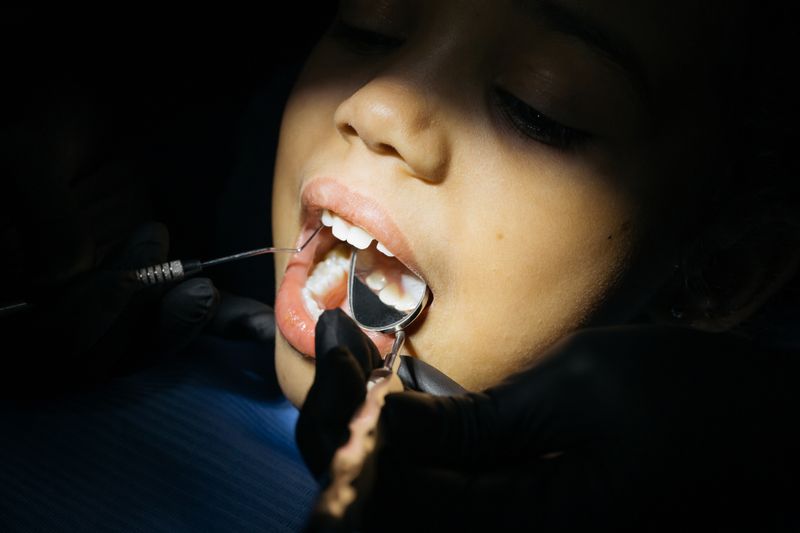
Tooth decay is the most common chronic disease in the UK, affecting millions of adults and children. The good news is that decay doesn't happen overnight. It progresses through distinct stages, and the earlier you catch it, the simpler and cheaper it is to treat. Understanding what to look for can genuinely save you from pain, costly procedures, and even tooth loss.
Key Takeaways
- •Tooth decay progresses through 5 stages, from reversible white spots to irreversible tooth loss
- •Stage 1 (white spots) can be reversed with fluoride treatment and improved oral hygiene
- •Once a cavity has formed (Stage 2+), professional treatment is needed. It will not heal on its own
- •Regular check-ups catch decay at early stages when treatment is simpler and cheaper
- •NHS fillings cost £76.60 (Band 2). A root canal or extraction at later stages costs much more
- •Reducing sugar intake and brushing with fluoride toothpaste are the most effective prevention
Stage 1: White Spots and Demineralisation
The very first sign of decay is often a chalky white spot on the surface of a tooth. This happens when acids produced by bacteria in plaque begin to dissolve the minerals in your enamel — a process called demineralisation. At this point, no cavity has formed yet, and the tooth surface remains intact.
What it looks like: A dull, opaque white or slightly yellowish patch, typically near the gum line or between teeth. You're unlikely to feel any pain at this stage.
Treatment: This is the only stage where decay can potentially be reversed. Your dentist may recommend concentrated fluoride treatments (varnishes or gels), improved brushing technique with fluoride toothpaste, and reducing sugar intake. The goal is to encourage remineralisation — allowing minerals to be redeposited back into the enamel.
Tip: Fluoride is your best friend at this stage. Use a toothpaste with at least 1,350 ppm fluoride and consider a fluoride mouthwash. Your dentist can also apply professional-strength fluoride varnish during routine check-ups.
Worried you might have early signs of decay? Search for a dentist near you to get it checked.
Stage 2: Enamel Decay
If demineralisation continues unchecked, the enamel begins to break down and a cavity (hole) forms. Enamel is the hardest substance in the human body, but it has no living cells and cannot repair itself once a cavity develops.
What it looks like: You may notice a small brown or dark spot on the tooth. The surface may feel rough if you run your tongue over it. Some people notice mild sensitivity, but many feel nothing at all at this stage — which is why regular dental X-rays are so important.
Treatment: A standard filling is usually all that's needed. Your dentist will remove the decayed enamel and fill the cavity with composite resin (tooth-coloured) or amalgam. On the NHS, this falls under Band 2 treatment, currently costing £76.60 in England.
Stage 3: Dentine Decay
Beneath the enamel lies the dentine — a softer, yellowish layer that makes up the bulk of the tooth. Once decay reaches the dentine, it can spread more quickly because dentine is less resistant to acid attack than enamel.
What it looks like: The cavity may be visibly larger and darker. You're more likely to experience sensitivity or pain, particularly when eating sweet, hot, or cold foods. You might also notice that food gets trapped in the cavity.
Treatment: A filling is still often possible, though if a significant amount of tooth structure has been lost, your dentist may recommend an inlay, onlay, or crown to restore strength. The earlier this is caught within the dentine, the more conservative the treatment can be.
Not sure how far your decay has progressed? Describe your symptoms in the chat below and we can help you understand what to expect at your appointment.
Stage 4: Pulp Involvement
At the centre of every tooth is the pulp — soft tissue containing nerves, blood vessels, and connective tissue. When decay reaches the pulp, it causes inflammation (pulpitis) and often intense, throbbing pain.
What it feels like: This is usually when people experience the kind of toothache that won't go away — a persistent, deep, aching pain that may keep you awake at night. The pain can be spontaneous (not triggered by eating or drinking) and may radiate to the ear, jaw, or temple.
Treatment: At this stage, a simple filling won't suffice. Root canal treatment is typically needed — this involves removing the infected pulp, cleaning the root canals, and sealing the tooth. A crown is usually placed afterwards to protect the weakened tooth. This still falls under NHS Band 2 (£76.60) when clinically necessary.
Warning: Don't ignore persistent toothache or try to manage it with painkillers alone. Once the pulp is infected, it will not heal on its own and delaying treatment increases the risk of an abscess forming.
Stage 5: Abscess
If infected pulp is not treated, the bacteria can spread beyond the tip of the tooth root and into the surrounding bone, forming a dental abscess. This is a pocket of pus caused by bacterial infection and is considered a dental emergency.
What it looks and feels like: Severe, constant pain that may be accompanied by facial swelling, a foul taste in the mouth, fever, and difficulty opening your mouth or swallowing. You may notice a visible swelling on the gum near the affected tooth, sometimes with a pimple-like bump that oozes pus.
Treatment: Urgent dental care is needed. The abscess must be drained, and antibiotics may be prescribed to control the infection. Depending on the extent of damage, root canal treatment may still save the tooth — but in some cases, extraction is the only option. If an abscess is left untreated, the infection can spread to other parts of the body, which in rare cases can be life-threatening.
When to see a dentist urgently: If you have facial swelling, a fever, difficulty swallowing, or severe pain that painkillers are not controlling, seek emergency dental care immediately. Call NHS 111 if you cannot reach your dentist.
Why Early Detection Saves You Money
The financial case for catching decay early is compelling. A fluoride varnish at a routine check-up may be included in your NHS Band 1 charge (£27.90). A filling at Stage 2 costs £76.60 on the NHS. But if decay progresses to the point where you need root canal treatment and a crown, you're still looking at Band 2 — though if the tooth can't be saved, you may face the cost of a replacement such as a bridge, denture, or implant, which can run into hundreds or thousands of pounds privately.
Beyond cost, there's the matter of time, discomfort, and the irreversible loss of natural tooth structure. A small filling preserves far more of your tooth than a crown does, and keeping your natural teeth is always preferable to any artificial replacement.
Prevention: Keeping Decay at Bay
Most tooth decay is preventable with good habits:
- Brush twice daily with fluoride toothpaste (at least 1,350 ppm) for two minutes
- Clean between your teeth daily using floss or interdental brushes
- Limit sugary foods and drinks — and try to keep them to mealtimes rather than snacking throughout the day
- Don't rinse after brushing — spit out the toothpaste but let the fluoride sit on your teeth
- Attend regular dental check-ups — your dentist can spot early decay that you cannot see or feel
- Consider fissure sealants for children, which provide a protective coating over the biting surfaces of back teeth
Bottom line: Tooth decay progresses through predictable stages, and the earlier it's caught, the simpler and cheaper it is to treat. Don't wait for pain — by the time a tooth hurts, decay has usually reached an advanced stage. Regular check-ups are your best defence.
Sources
- • NHS – Tooth decay
- • NHS – NHS dental charges
- • Oral Health Foundation – Dental decay
Last reviewed on 15 April 2026 by Dr Tristan Tinn